Historia wersji
Na tej stronie nie opublikowano jeszcze historii wersji.
BricksPattern generates real three-dimensional brick, tile, parquet and paving geometry on flat and curved mesh surfaces in Autodesk 3ds Max.
Na tej stronie nie opublikowano jeszcze historii wersji.
18Geometry-level brick and tile patterns applied directly to your mesh.
4Modifier capabilities
3DReal joint geometry
2021–20273ds Max 2021–2027
Workflow
Add the modifier, pick a pattern, set element dimensions and joint depth — the mesh is updated in real time. You can stack BricksPattern with other modifiers, or collapse it to a static mesh when the geometry is final.
How BricksPattern fits into an archviz pipeline.
01
Select a plane, wall segment or curved surface. Add BricksPattern from the Modifier list. The plugin reads the UV channel and subdivides the surface into the brick layout immediately.
02
Change pattern type, brick dimensions, joint width and joint depth. Add per-element height and size variation using the seed controls. All changes are non-destructive while the modifier stack is active.
03
Apply a Multi/Sub-Object material using the automatically assigned Material IDs. Render with V-Ray, Corona, Arnold or any other renderer. The real geometry produces correct shadows and AO without baking.
04
BricksPattern assigns separate Material IDs to brick faces and joint faces. This lets you apply different materials — glazed vs matte, weathered vs fresh — to each zone using a standard Multi/Sub-Object material.
Modifier capabilities
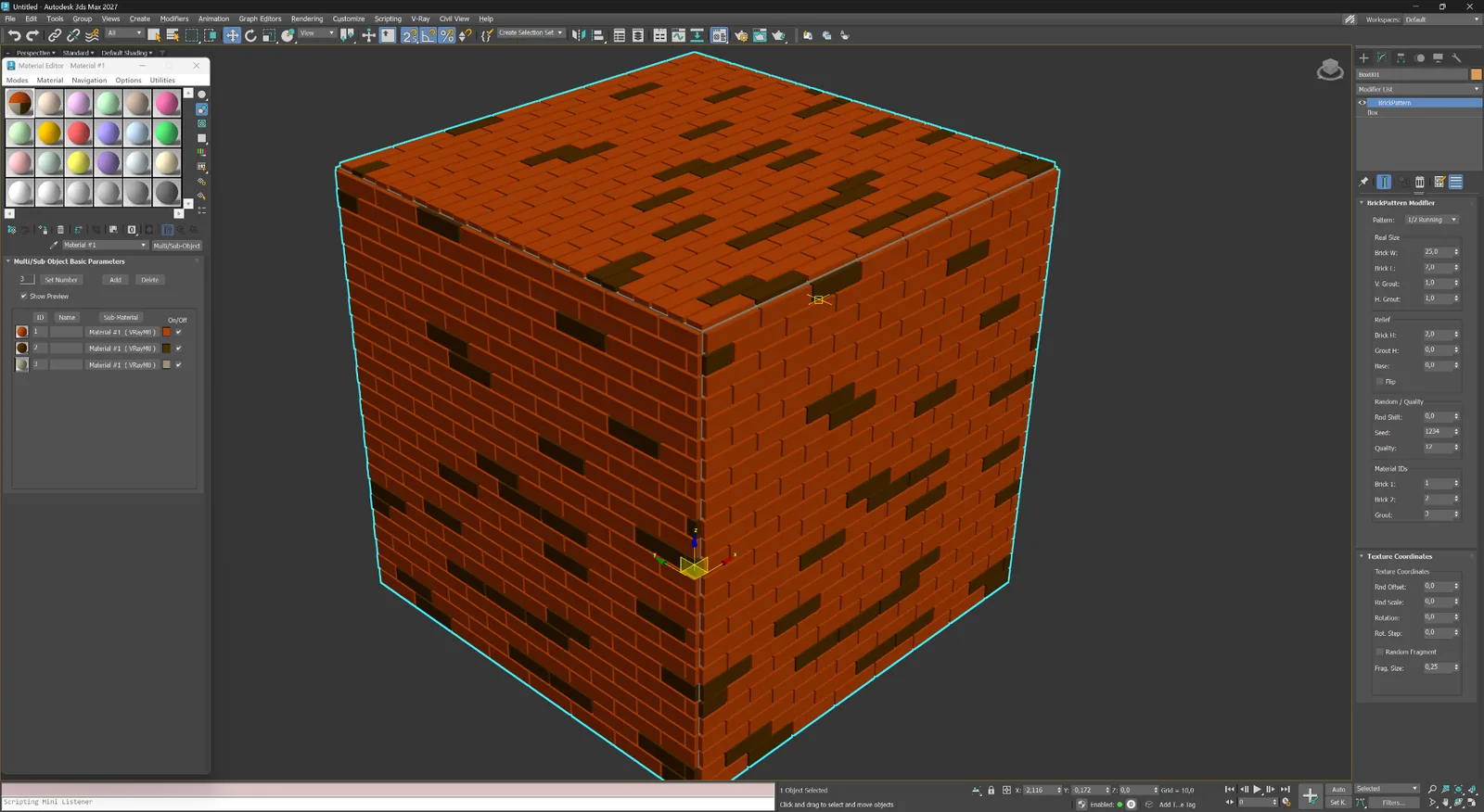
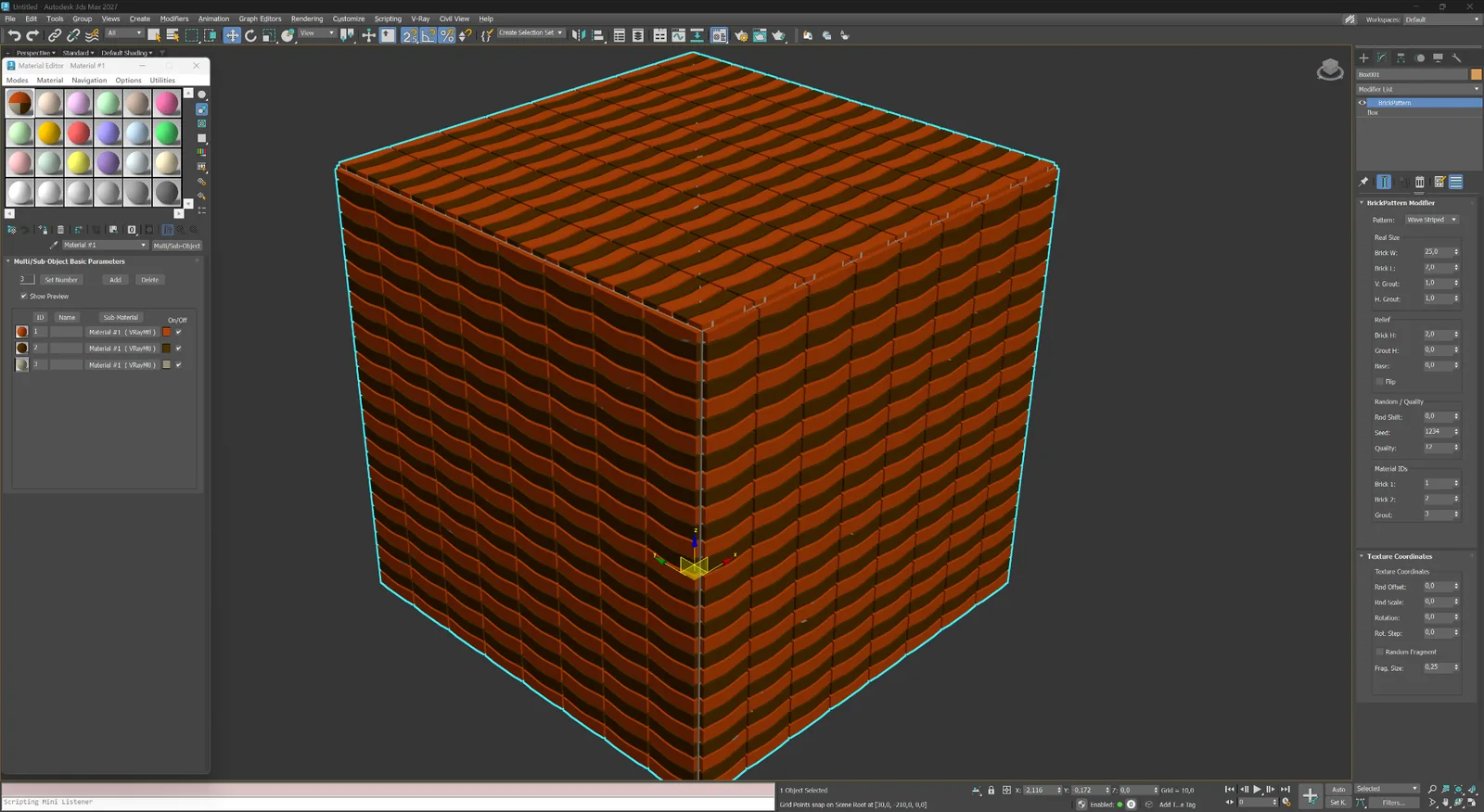
BricksPattern does not produce a texture map — it modifies the mesh itself. The result is a surface with actual raised or recessed element geometry that responds correctly to any lighting setup, especially in close-up renders.
▱
BricksPattern applies to any quad or poly mesh — flat walls, cylindrical columns, vaulted ceilings. The brick layout follows the local surface curvature and UV space, so curved surfaces look correct without manual adjustment.
⌁
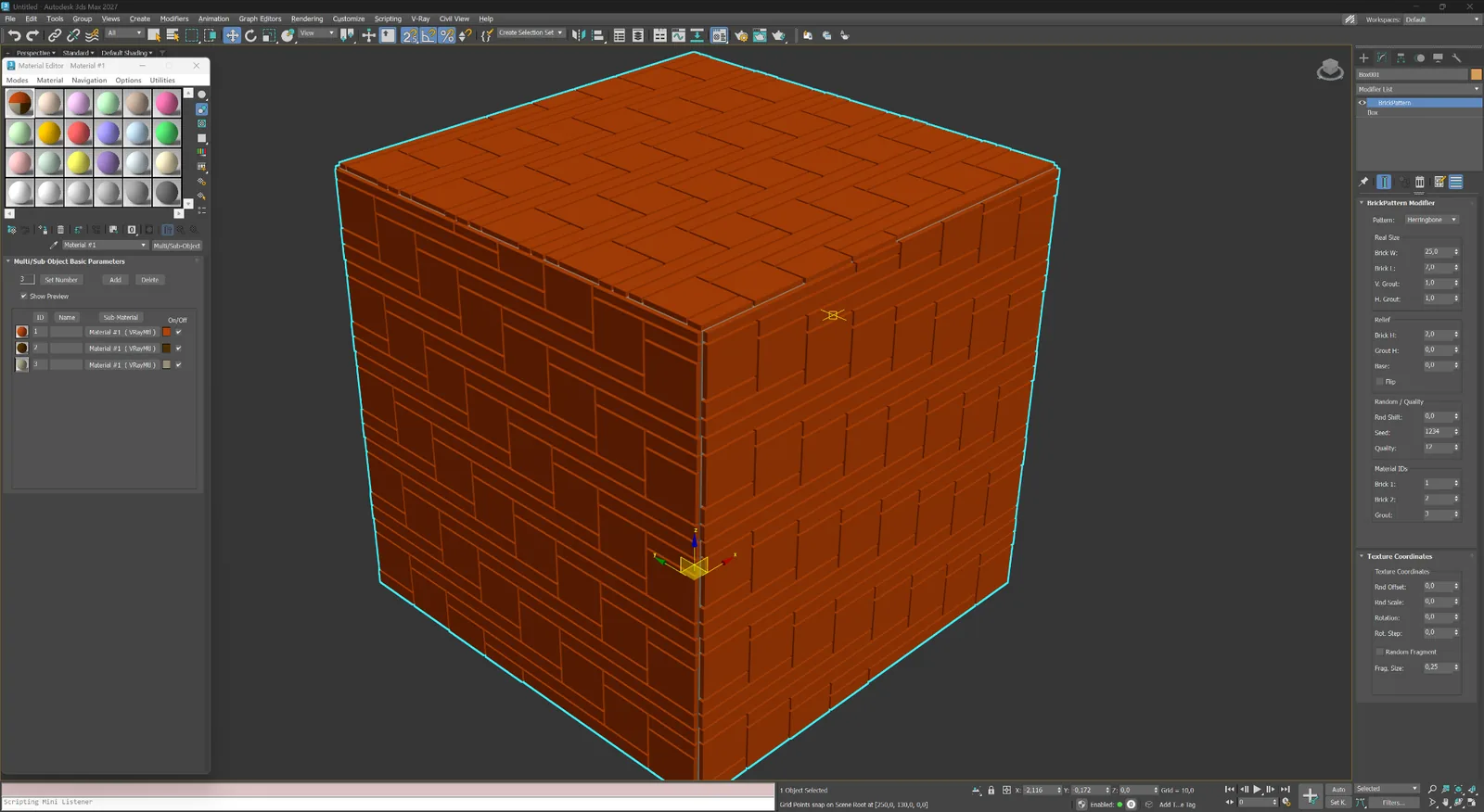
Choose from Running Bond (1:2, 1:3), Stack Bond, Flemish, Basket Weave, Herringbone, Hexagonal and more. Pattern geometry is built from parametric element dimensions: width, height, depth, and joint width.
#
Joints are three-dimensional: their depth, bevel angle and width are all controllable. This produces accurate shadowing and self-occlusion in renderers such as V-Ray and Corona without relying on bump or normal maps.
ID
Each brick or tile can receive individual random offsets in size, position and surface height. The variation is controlled by a seed value, giving you reproducible results while keeping the look natural and non-repetitive.
Modifier capabilities
BricksPattern does not produce a texture map — it modifies the mesh itself. The result is a surface with actual raised or recessed element geometry that responds correctly to any lighting setup, especially in close-up renders.
Masonry Parquet & modular Pavement & decorative Abstract & custom
01
Wiązania biegowe, flamandzkie i stosowe do elewacji ceglanych, ścian i okładzin ceramicznych.
Masonry
Klasyczne wiązanie biegowe z przesunięciem o pół cegły do elewacji, ścian i zbliżeń muru.
Masonry
Wiązanie biegowe z przesunięciem o jedną trzecią dla dłuższego i mniej powtarzalnego rytmu muru.
Masonry
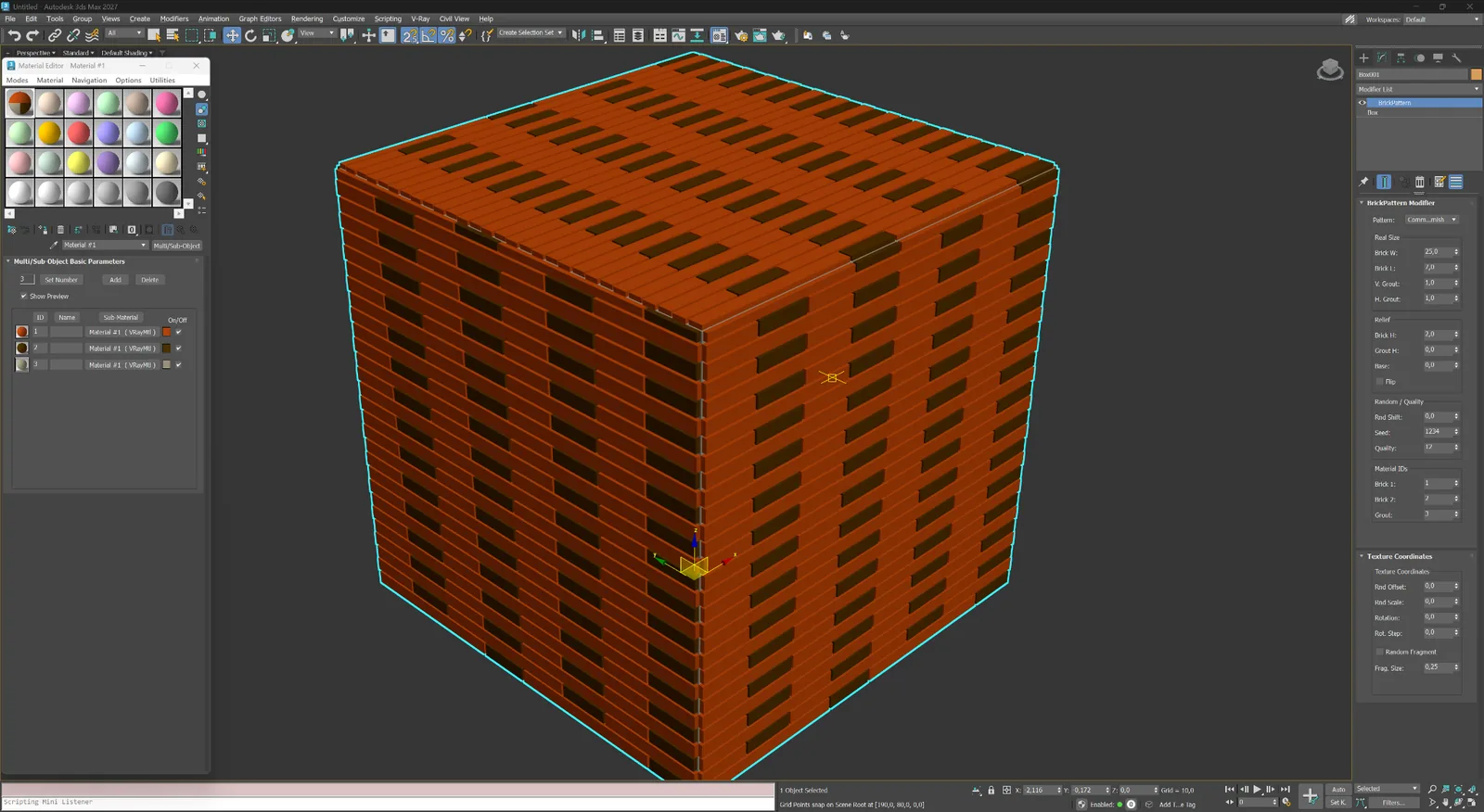
Naprzemienny układ wozówek i główek dla tradycyjnego dekoracyjnego muru ceglanego.
Masonry
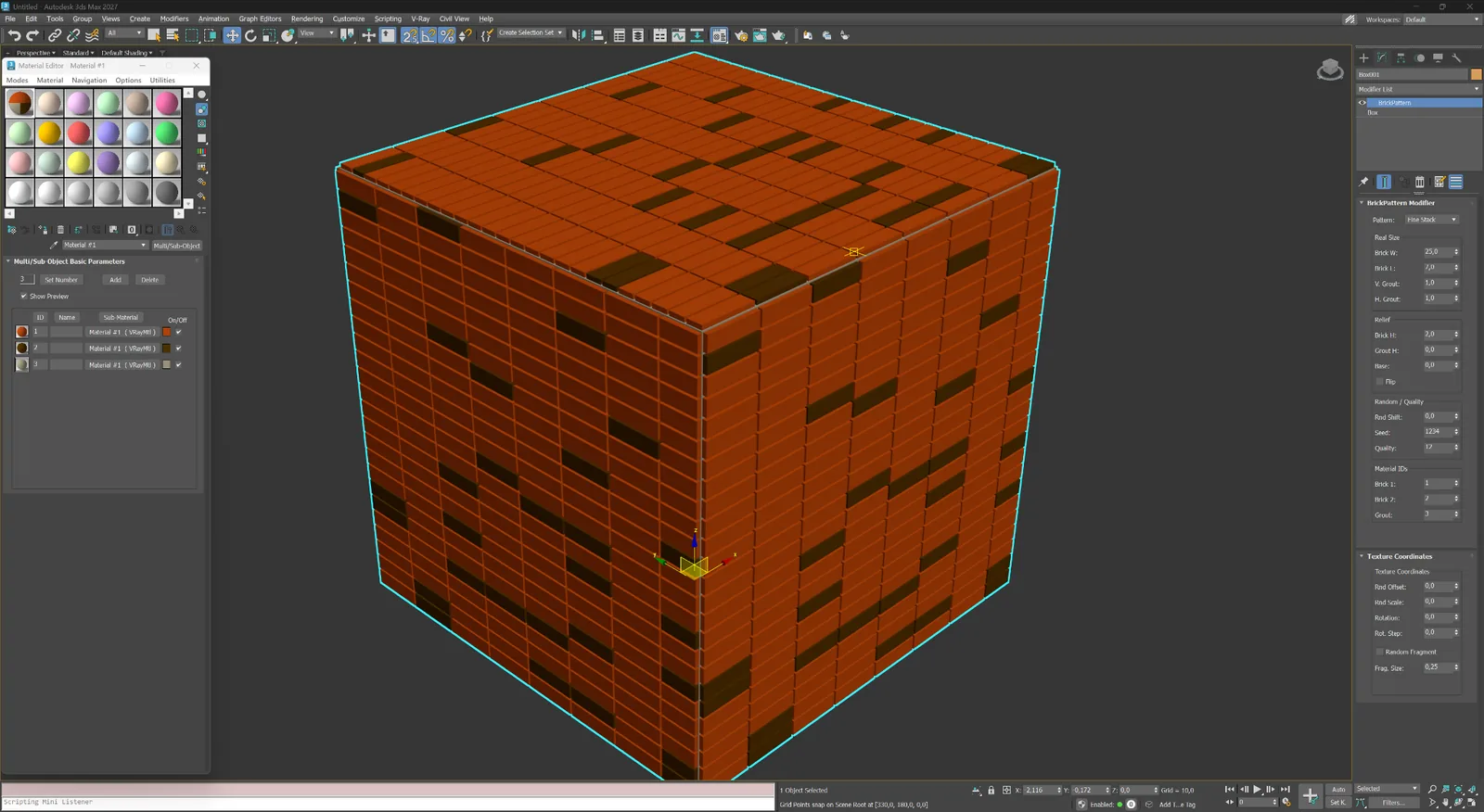
Precyzyjna siatka stosowa odpowiednia dla nowoczesnych elewacji z cegły, płytek i paneli.
02
Kierunkowe i modułowe systemy do podłóg, płytek, kamienia i dekoracyjnych paneli architektonicznych.
Parquet & modular
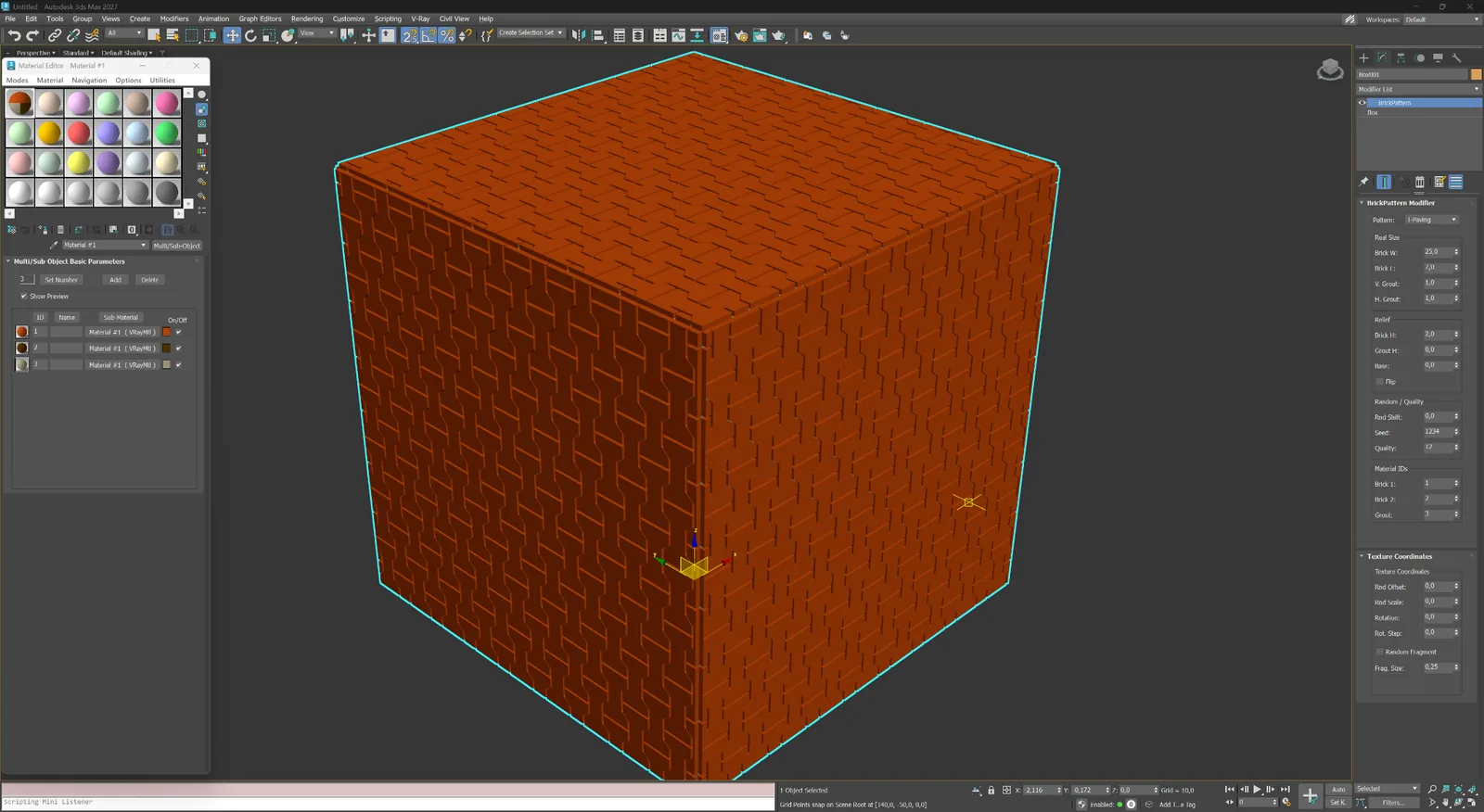
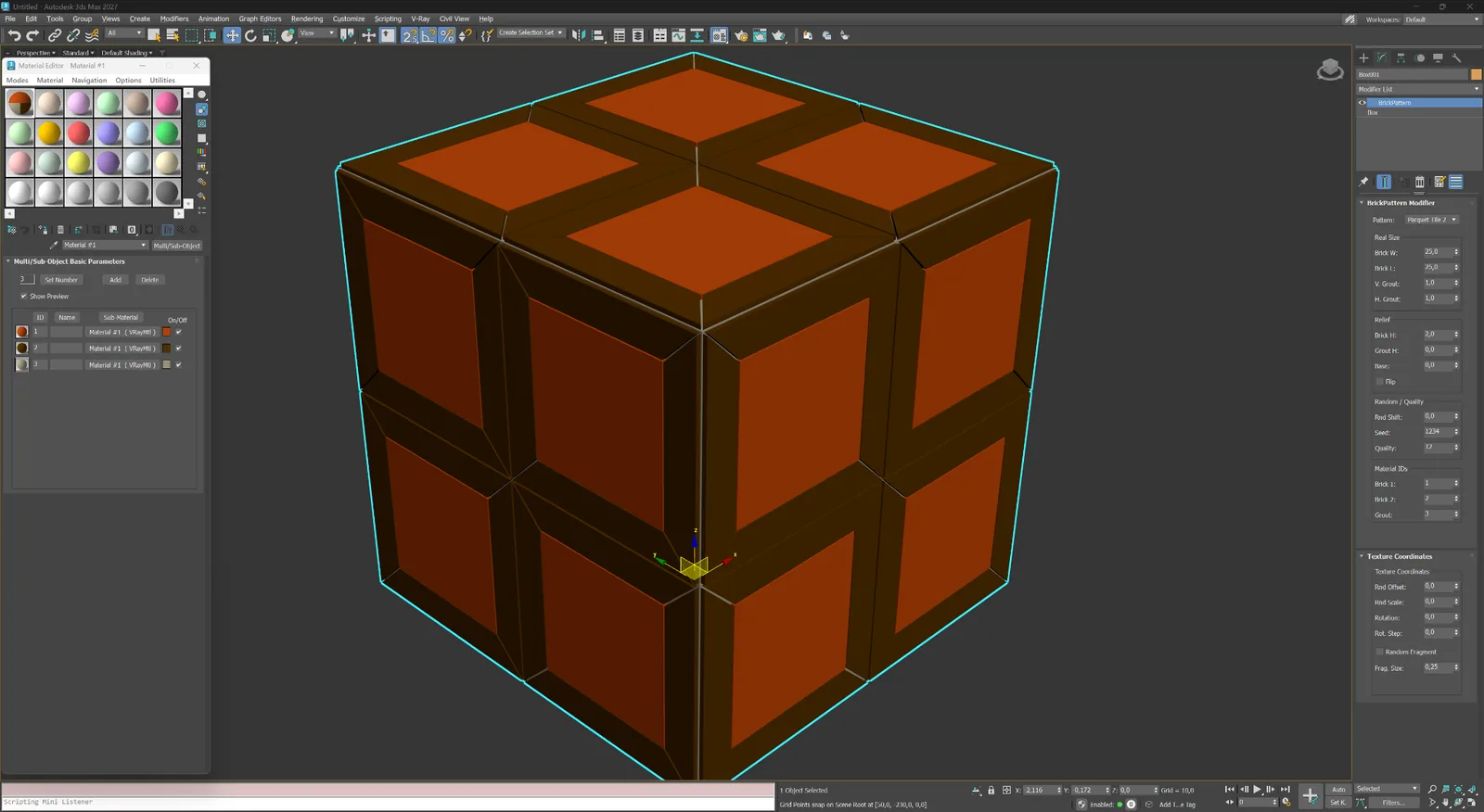
Zazębiające się prostokątne elementy do parkietu, płytek, kamienia i dekoracyjnych okładzin.
Parquet & modular
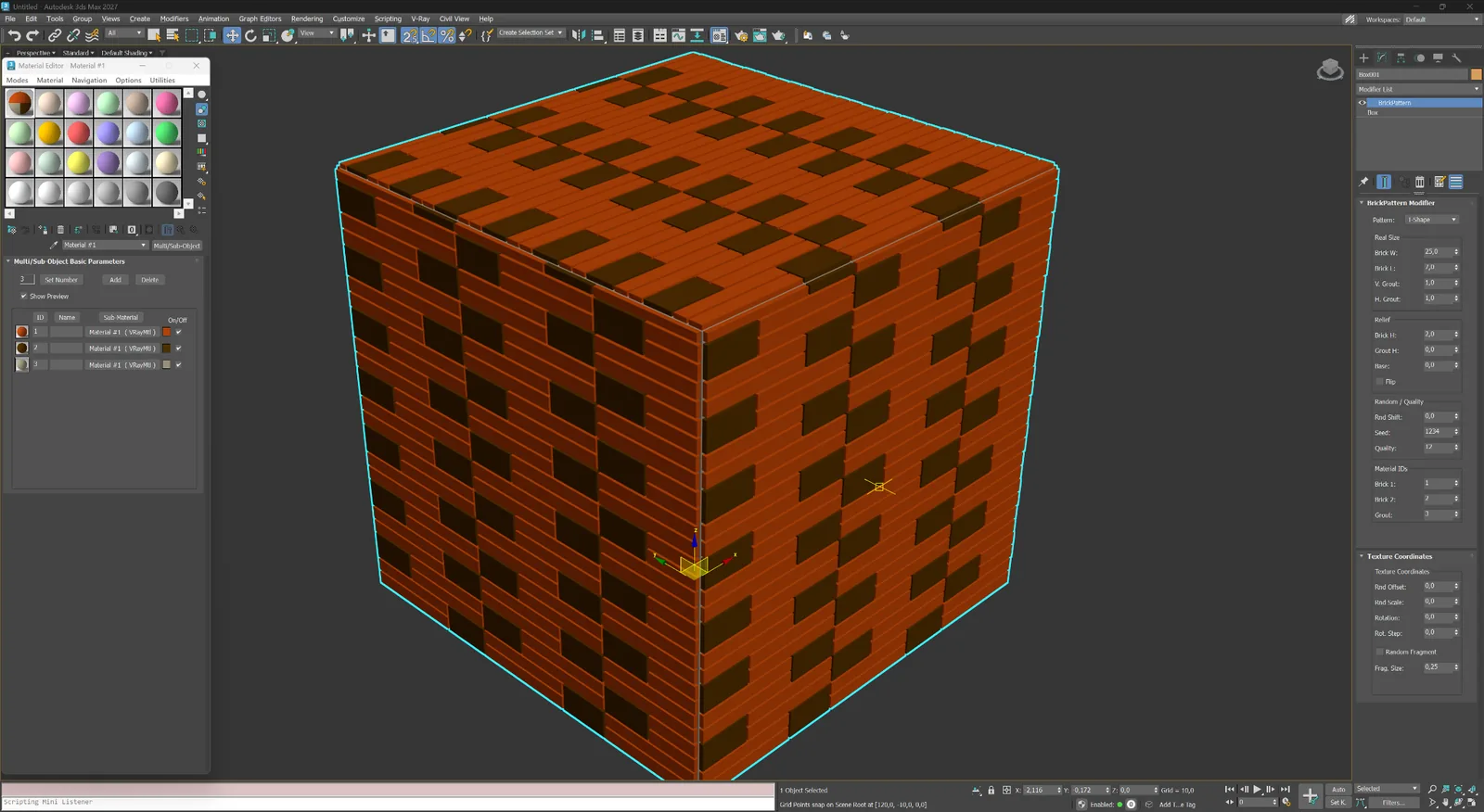
Modułowy układ w kształcie litery T do charakterystycznych podłóg, ekranów i paneli architektonicznych.
Parquet & modular
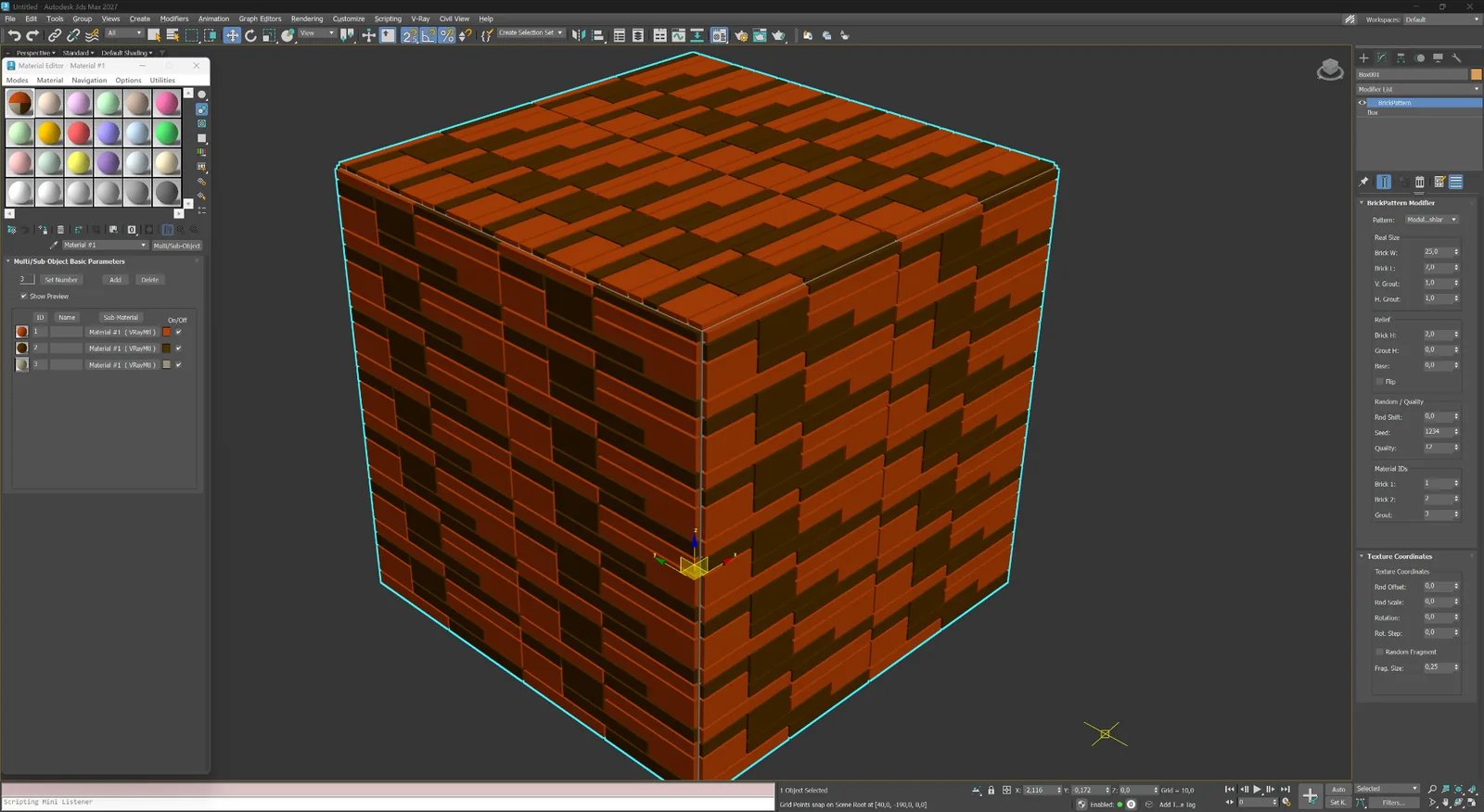
Mieszane moduły prostokątne ułożone w kontrolowaną kompozycję ashlar.
Parquet & modular
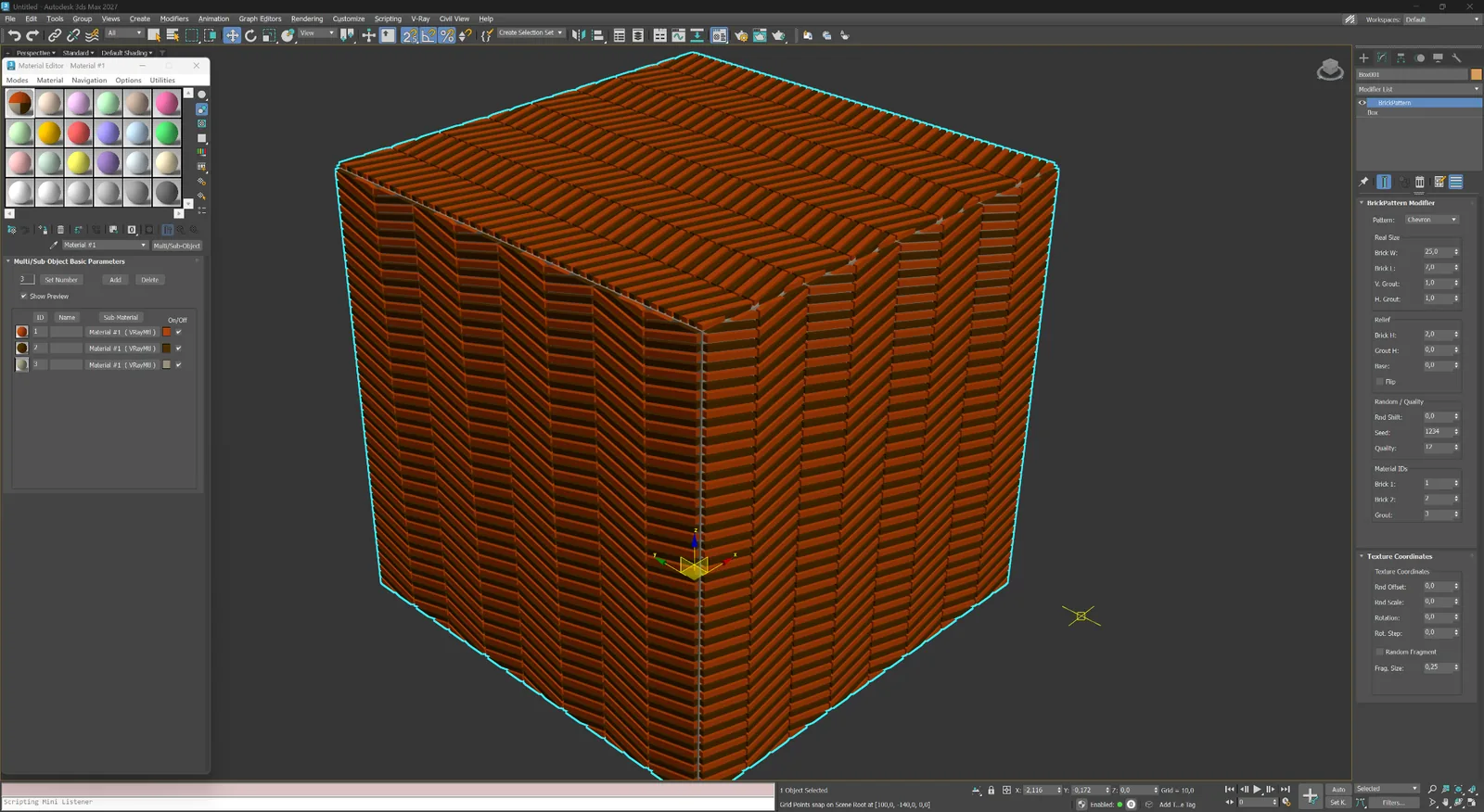
Elementy pod kątem zbiegające się na osi centralnej, tworzące wyraziste powierzchnie kierunkowe.
Parquet & modular
Duże moduły ramkowe z czystym geometrycznym środkiem do ozdobnych podłóg i systemów ściennych.
Parquet & modular
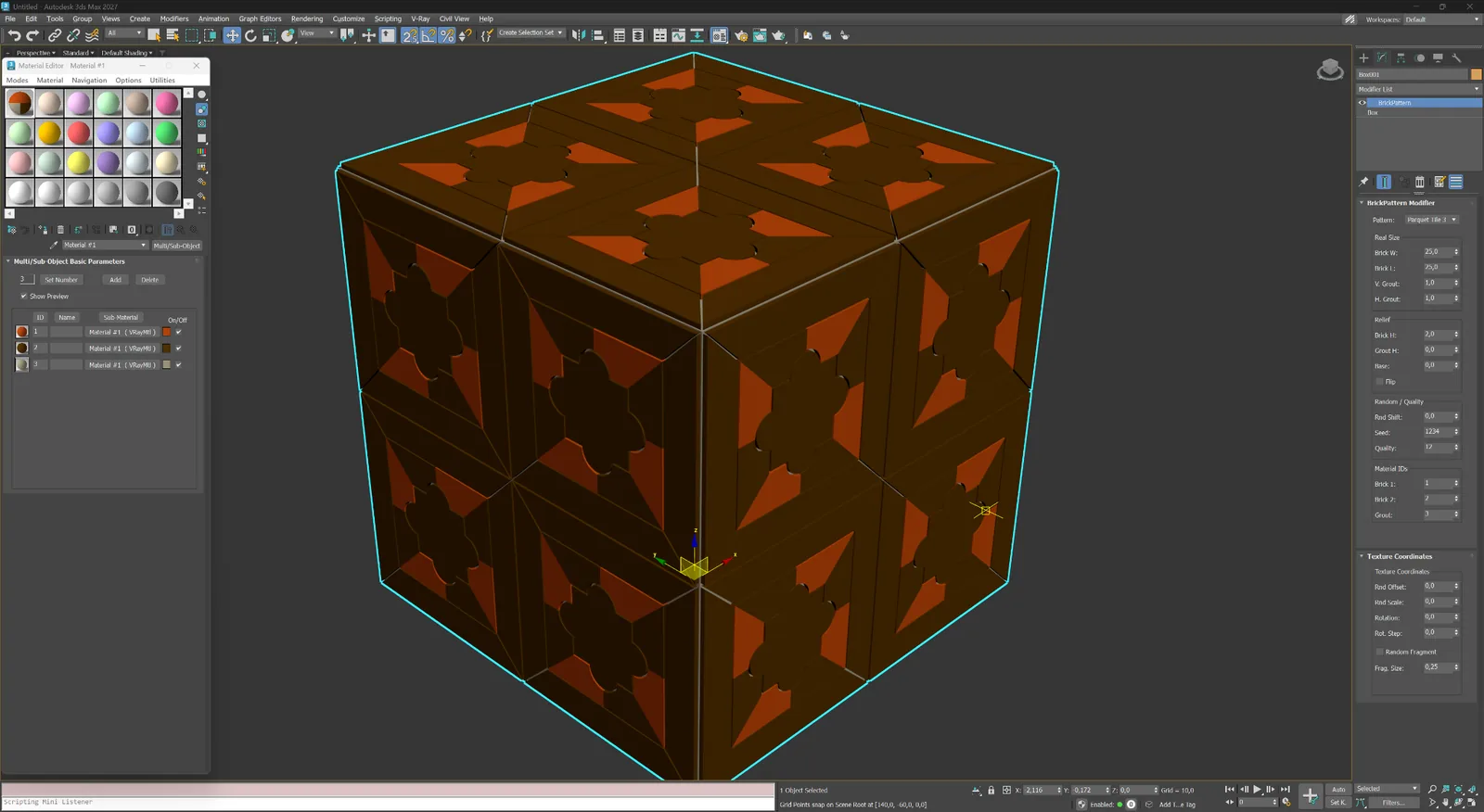
Dekoracyjne moduły ramkowe z kwiatowym środkiem do wyrazistych kompozycji parkietowych i panelowych.
03
Systemy sześciokątne, faliste, liściaste i ramkowe do nawierzchni krajobrazowych i powierzchni ornamentalnych.
Pavement & decorative
Powtarzalne moduły sześciokątne do nawierzchni, płytek ceramicznych i wzorzystych systemów elewacyjnych.
Pavement & decorative
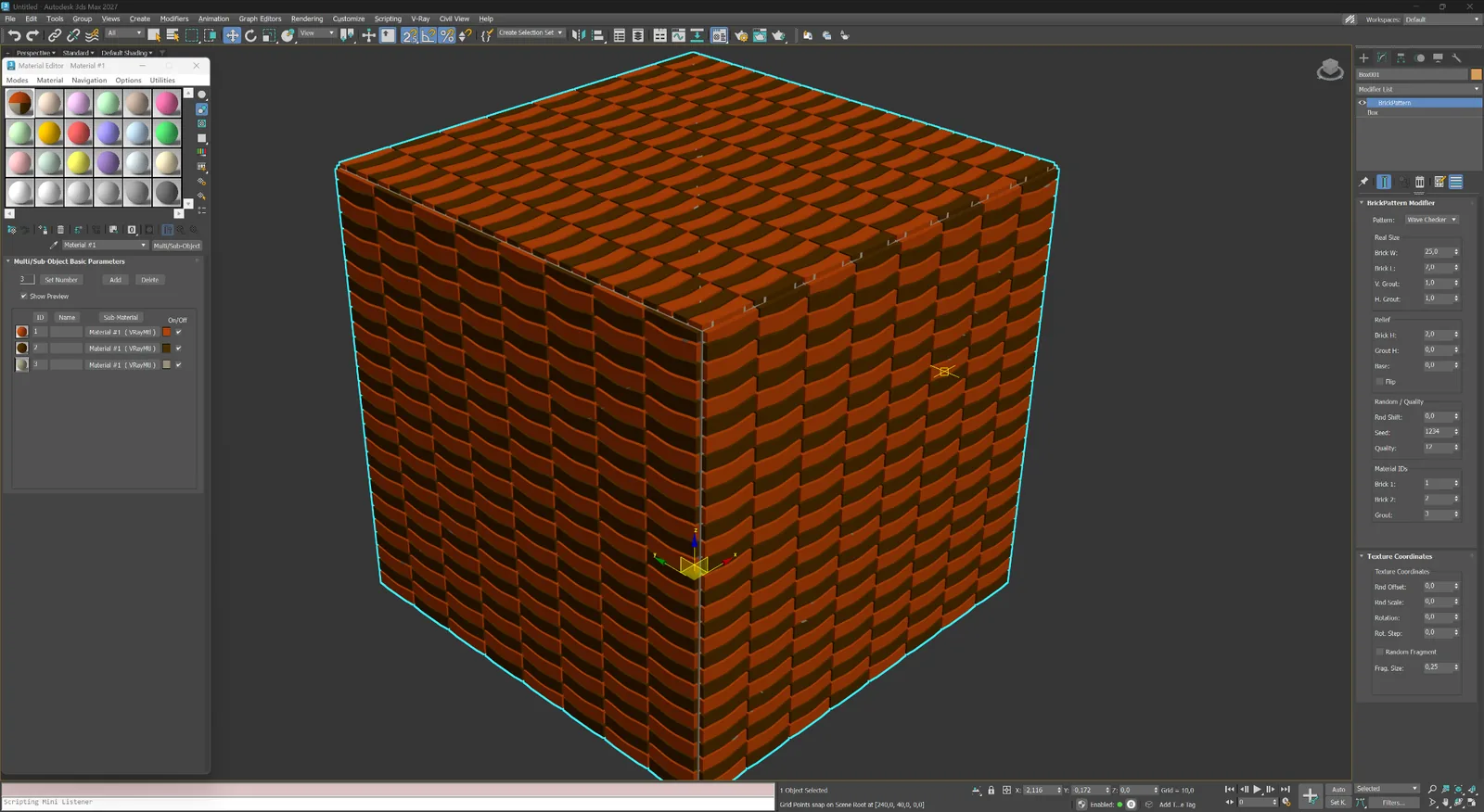
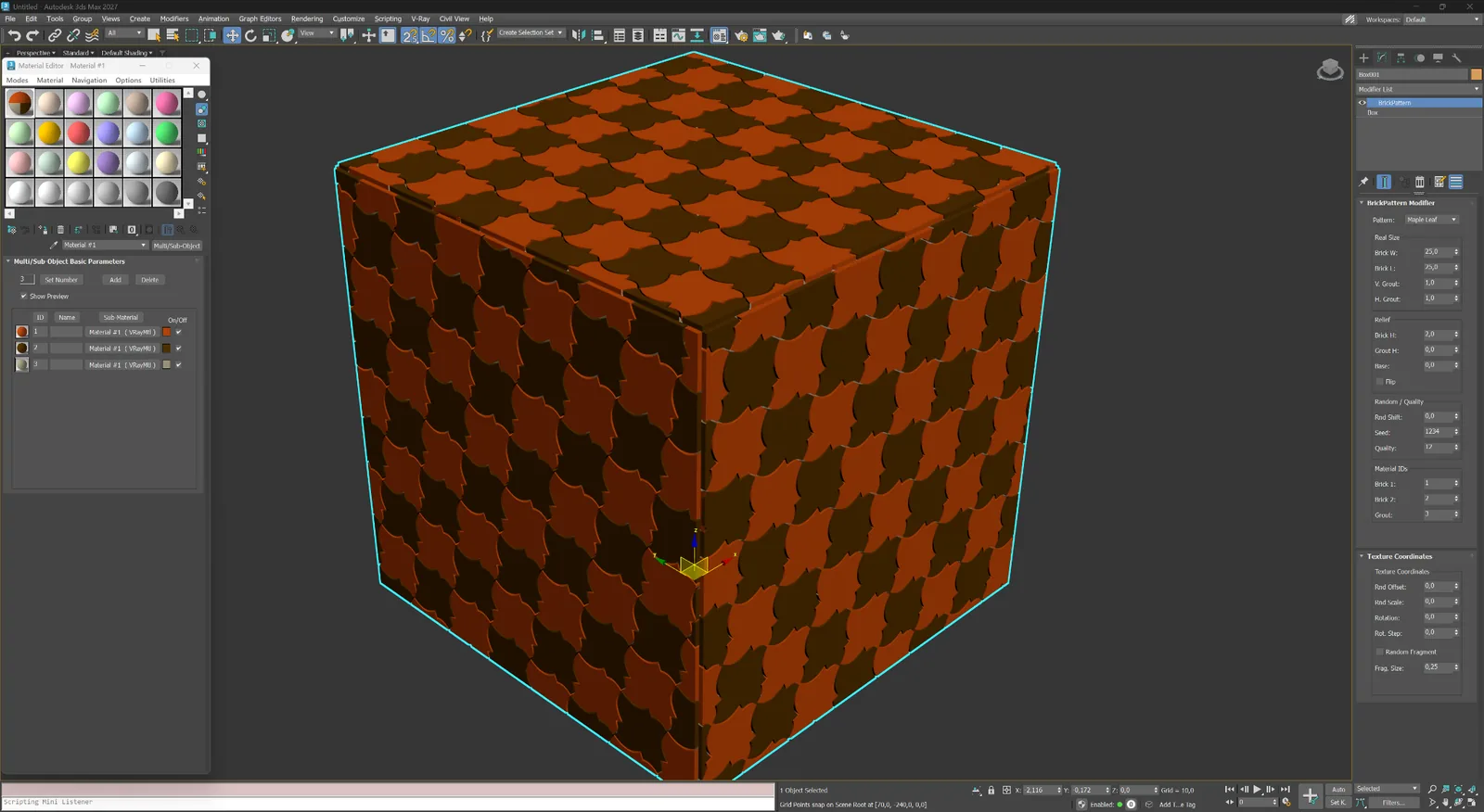
Naprzemienne moduły krzywoliniowe tworzące miękki rytm szachownicy na powierzchni.
Pavement & decorative
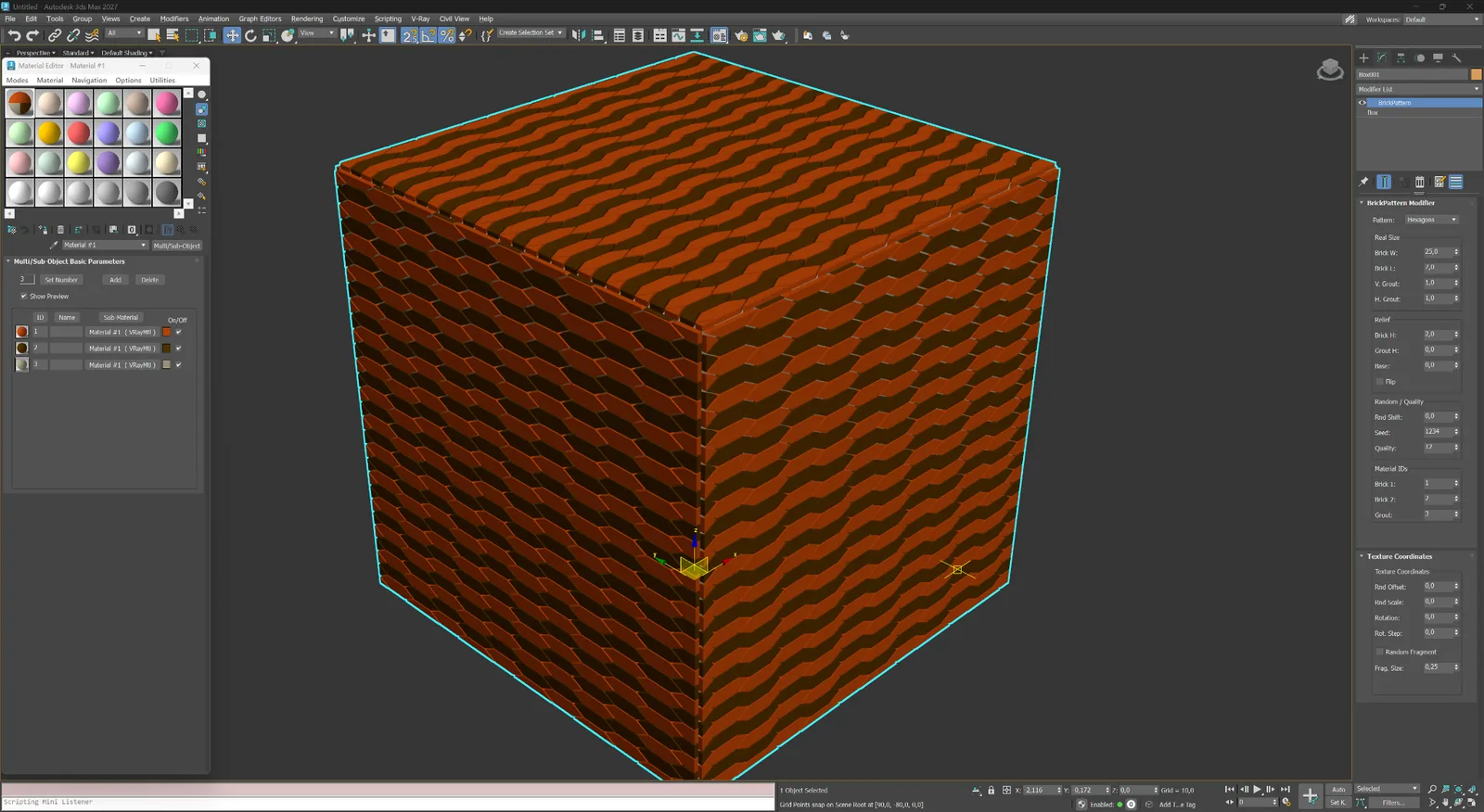
Ciągłe pasma faliste do dekoracyjnych nawierzchni i ekspresyjnych powierzchni wnętrz.
Pavement & decorative
Dekoracyjny moduł w kształcie liścia do ozdobnych nawierzchni i niestandardowych płytek.
Pavement & decorative
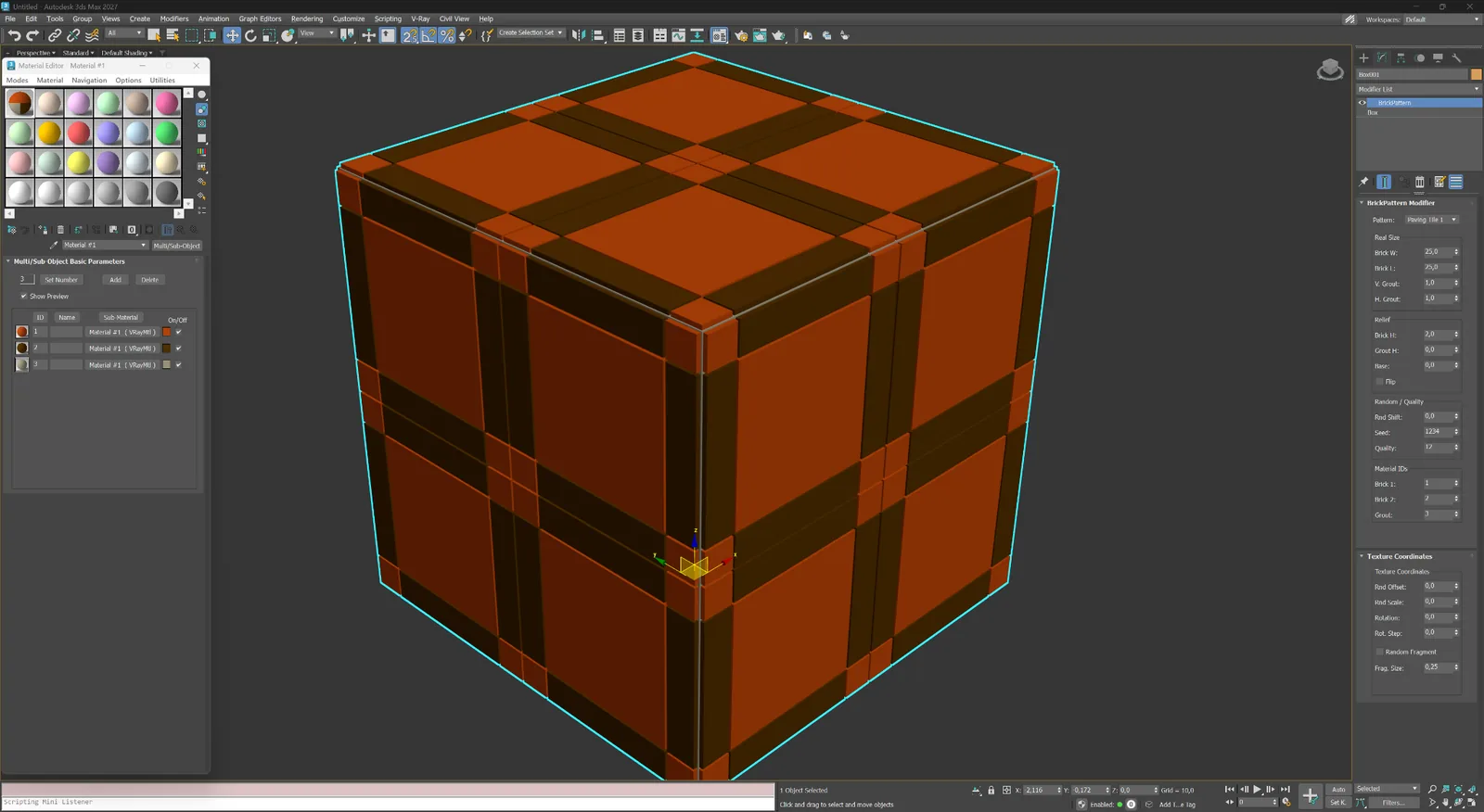
Large framed paving modules with strong cross-joint geometry.
Pavement & decorative
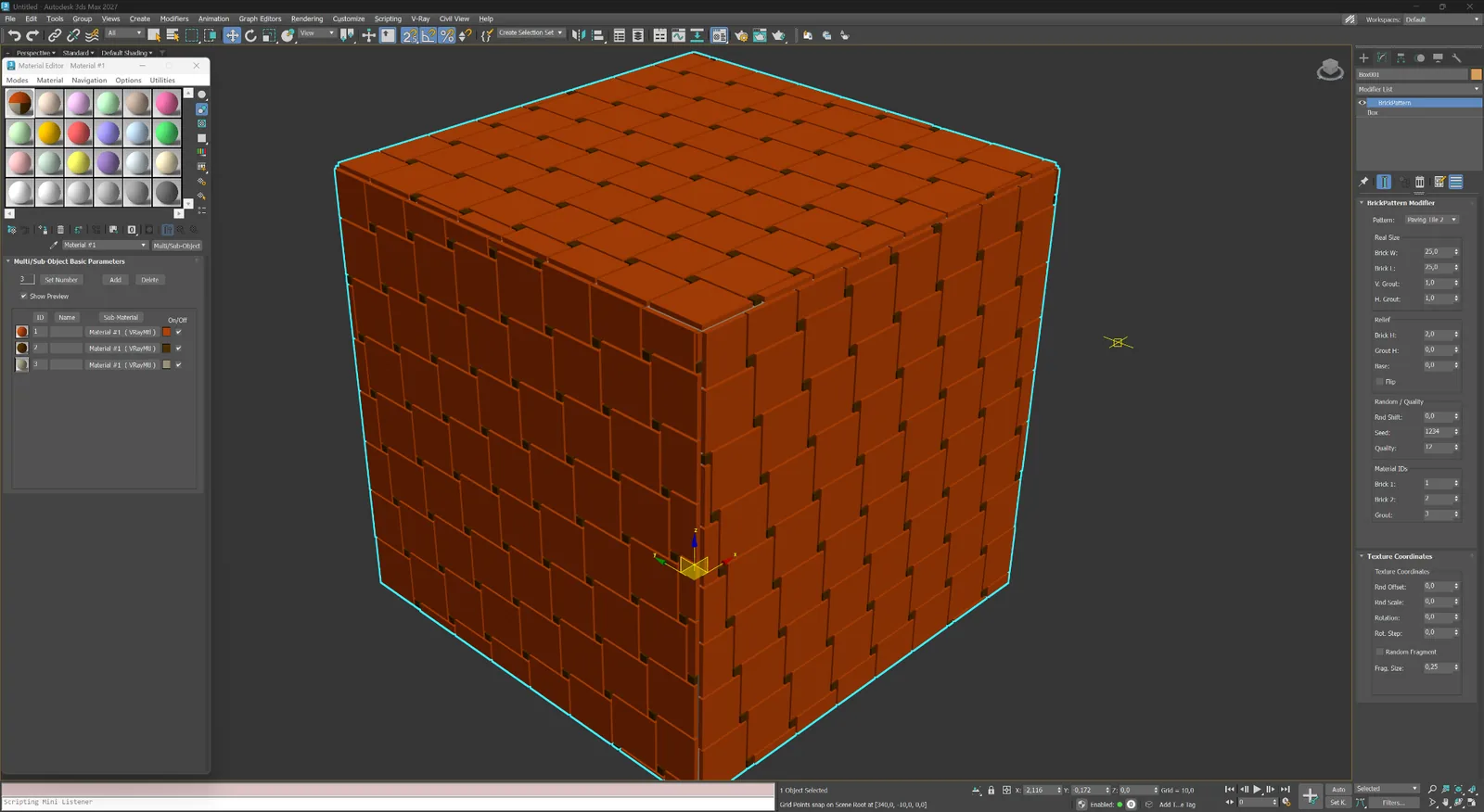
Prostokątne moduły płytek z kompaktowymi wkładkami narożnymi i regularnym powtórzeniem.
04
Niestandardowe logiki geometryczne do ekranów, paneli akcentowych i autorskich układów.
Abstract & custom
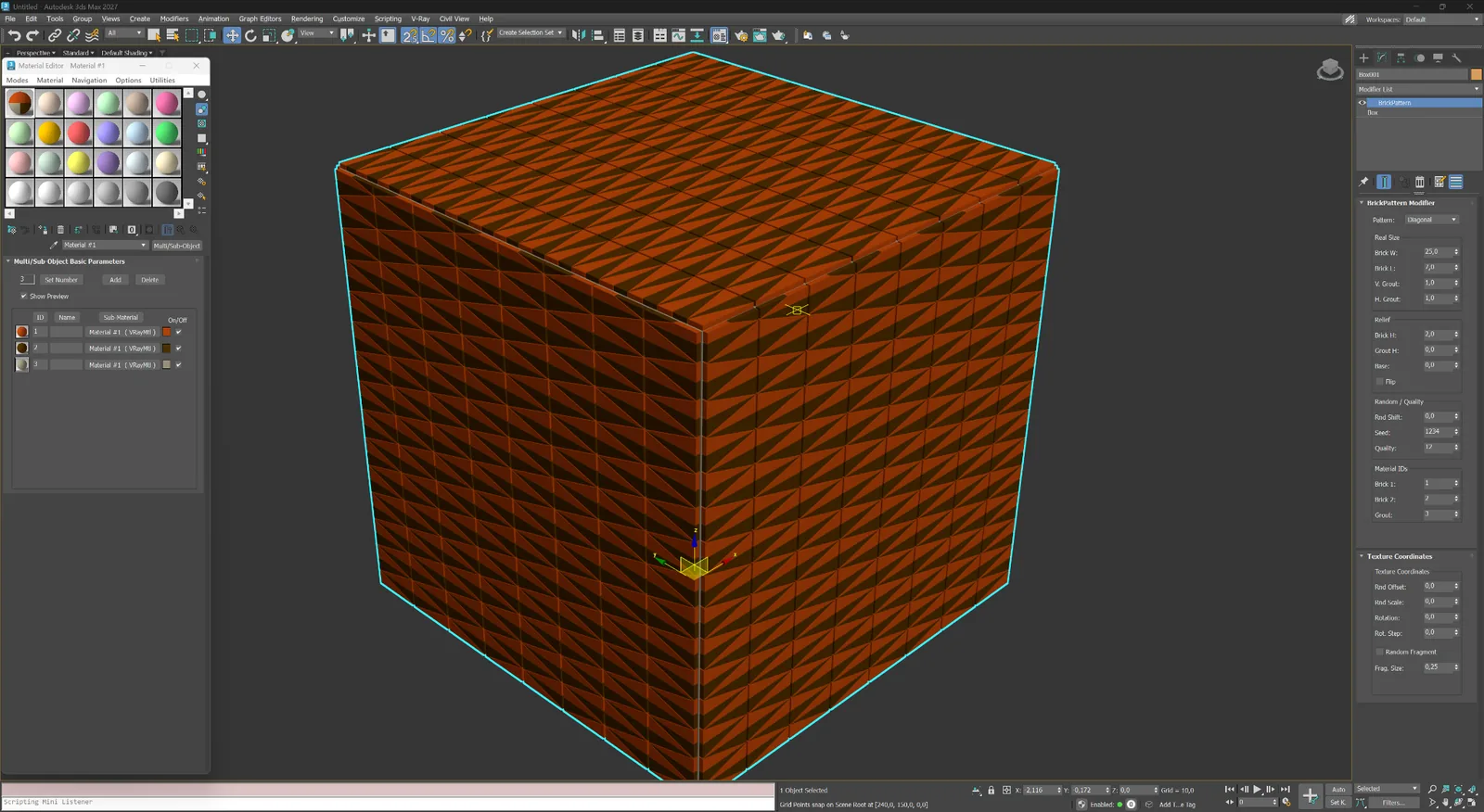
Gęsta geometria diagonalna do eksperymentalnych ekranów, paneli i powierzchni abstrakcyjnych.
Abstract & custom
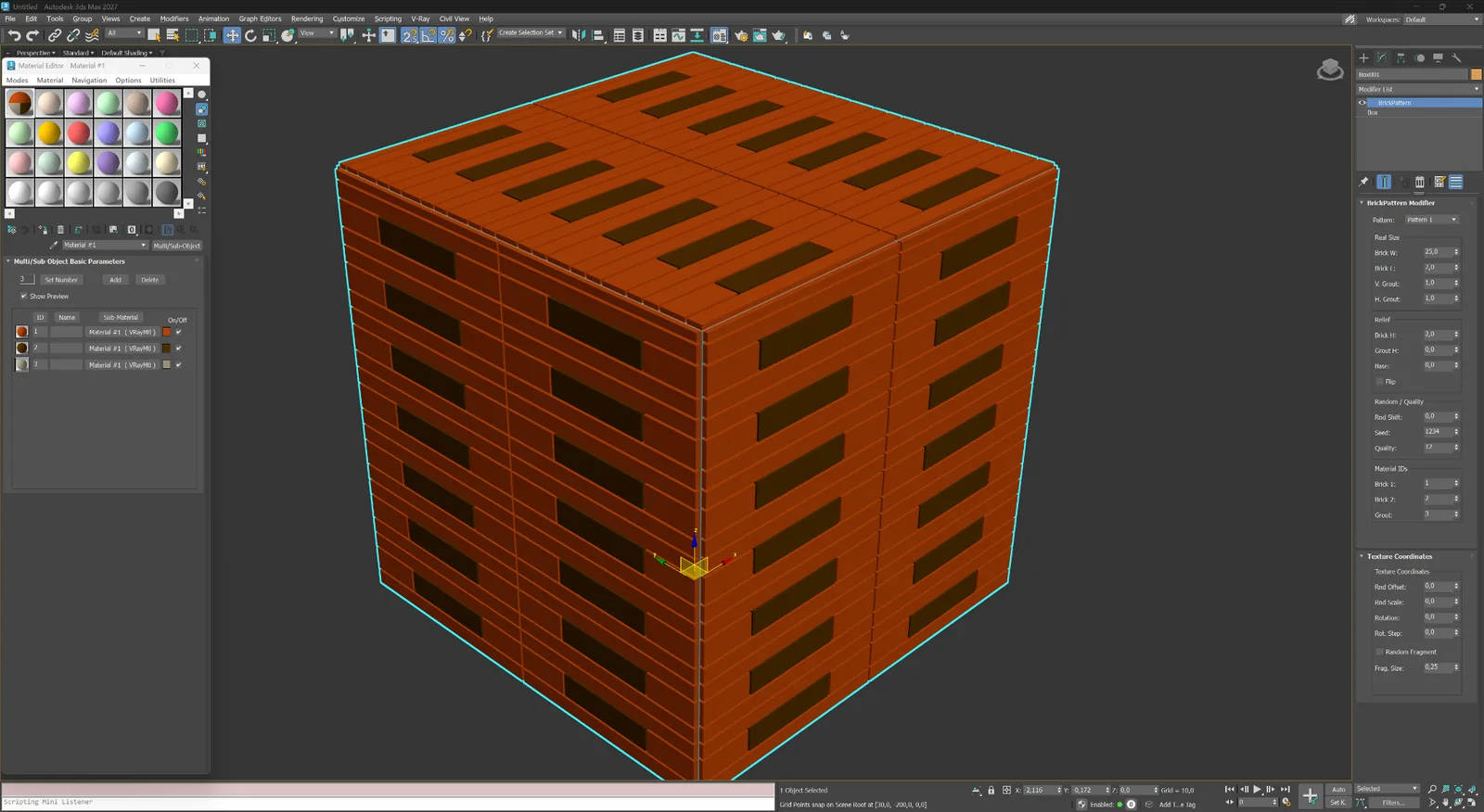
Własny układ wydłużonych modułów do niestandardowych kompozycji architektonicznych.
Modifier capabilities
BricksPattern does not produce a texture map — it modifies the mesh itself. The result is a surface with actual raised or recessed element geometry that responds correctly to any lighting setup, especially in close-up renders.
01
BricksPattern applies to any quad or poly mesh — flat walls, cylindrical columns, vaulted ceilings. The brick layout follows the local surface curvature and UV space, so curved surfaces look correct without manual adjustment.
02
Choose from Running Bond (1:2, 1:3), Stack Bond, Flemish, Basket Weave, Herringbone, Hexagonal and more. Pattern geometry is built from parametric element dimensions: width, height, depth, and joint width.
03
Joints are three-dimensional: their depth, bevel angle and width are all controllable. This produces accurate shadowing and self-occlusion in renderers such as V-Ray and Corona without relying on bump or normal maps.
04
Each brick or tile can receive individual random offsets in size, position and surface height. The variation is controlled by a seed value, giving you reproducible results while keeping the look natural and non-repetitive.
05
BricksPattern assigns separate Material IDs to brick faces and joint faces. This lets you apply different materials — glazed vs matte, weathered vs fresh — to each zone using a standard Multi/Sub-Object material.
06
BricksPattern and BricksMap are complementary. Use BricksMap for full-scene texture maps and repeated materials; use BricksPattern for foreground or hero elements that need real 3D brick topology for close-up camera shots.
Workflow
Dodaj modyfikator, wybierz wzór, ustaw wymiary elementów i głębokość spoin — siatka aktualizuje się w czasie rzeczywistym. BricksPattern można łączyć z innymi modyfikatorami albo zwinąć do statycznej siatki, gdy geometria jest gotowa.
01
Wybierz płaszczyznę, fragment ściany lub zakrzywioną powierzchnię. Dodaj BricksPattern z listy Modifier. Wtyczka odczyta kanał UV i natychmiast podzieli powierzchnię zgodnie z układem cegieł.
02
Zmień typ wzoru, wymiary cegły, szerokość i głębokość spoin. Dodaj losowe zróżnicowanie wysokości i rozmiaru poszczególnych elementów za pomocą ustawień seed. Dopóki stos modyfikatorów jest aktywny, wszystkie zmiany są niedestrukcyjne.
03
Zastosuj materiał Multi/Sub-Object wykorzystujący automatycznie przypisane Material IDs. Renderuj w V-Ray, Corona, Arnold lub dowolnym innym rendererze. Rzeczywista geometria zapewnia poprawne cienie i AO bez bake'owania.
BricksPattern vs BricksMap
best results are achieved using both together in one scene.
BricksPattern
BricksMap
Licencjonowanie
BricksPattern ma własną stronę zakupu. Po płatności licencja pojawia się na Twoim koncie. Aktywuj ją online przez stronę albo offline e-mailem na stanowiskach air-gapped.